Tricky Prank: How Visual Clues Turn Disorder Into a Puzzle
A room can communicate a complete comic situation before any character enters it. Tricky Prank: Annoying Quest draws its identity from that kind of playful disorder, where misplaced objects and unexpected details invite closer observation. This article studies the visual language behind a harmless prank scene without repeating the game description or claiming unconfirmed mechanics.
Disorder Works Best When It Has a Pattern
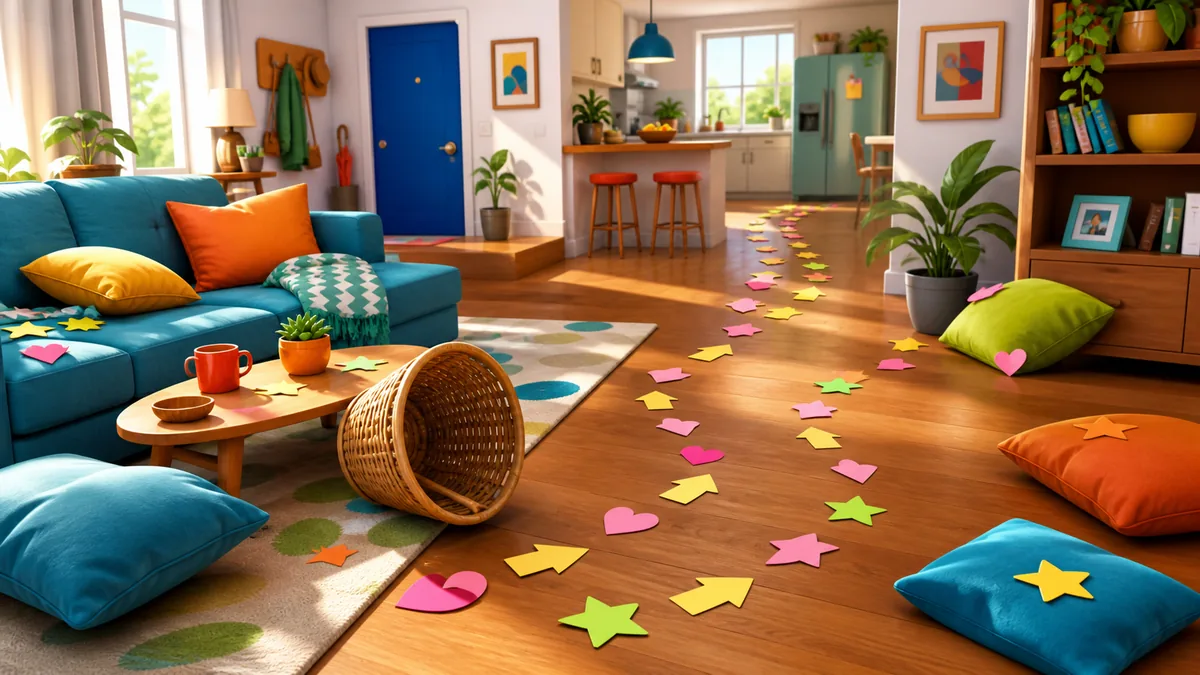
Bright paper shapes form a loose trail across the floor, connecting the foreground with the kitchen. Cushions have moved away from their usual positions, and an empty basket creates an obvious point of interruption. These changes remain easy to read because the furniture itself keeps a stable arrangement.
Color Separates Clues From Furniture
Blue upholstery and warm wood establish the room, while pink, yellow, and green pieces stand apart as possible clues. Natural daylight keeps small objects visible without making every surface equally important. The original hero illustration is editorial artwork, not a gameplay screenshot.
Details That Guide Attention
- A winding trail gives the eye a direction.
- Repeated shapes connect distant parts of the room.
- Open floor space prevents visual clutter.
- Strong color contrast highlights unusual objects.
Continue to the Puzzle
Open Tricky Prank: Annoying Quest on OviGames, explore the Puzzle Games category, or return to the OviGames homepage.
Closing Observation
A playful mystery becomes readable when ordinary surroundings provide a dependable baseline. Small disruptions then carry meaning, allowing color, placement, and repetition to suggest a story without relying on excessive decoration.
Extended Visual Essay
The visual argument around Tricky Prank becomes clearer when Disorder Works Best When It Has a Pattern is considered at a slower pace. This observation connects the larger scene with the smaller reference points already identified in the article. The specific note “Strong color contrast highlights unusual objects” supplies an article-based reference, so the discussion can develop from material already established rather than from an invented feature. That distinction keeps the discussion precise while allowing the image to receive a fuller critical reading.
Within Tricky Prank, the idea of Color Separates Clues From Furniture deserves more than a quick glance. The composition can be read as a sequence of choices about emphasis, distance, and balance. The specific note “A winding trail gives the eye a direction” supplies an article-based reference, so the discussion can develop from material already established rather than from an invented feature. That distinction keeps the discussion precise while allowing the image to receive a fuller critical reading.
A measured reading of Tricky Prank begins with the relationship described as Details That Guide Attention. The value of this detail lies in the way it organizes attention without relying on promotional claims. The specific note “Repeated shapes connect distant parts of the room” supplies an article-based reference, so the discussion can develop from material already established rather than from an invented feature. That distinction keeps the discussion precise while allowing the image to receive a fuller critical reading.
The visual argument around Tricky Prank becomes clearer when Continue to the Puzzle is considered at a slower pace. This observation connects the larger scene with the smaller reference points already identified in the article. The specific note “Open floor space prevents visual clutter” supplies an article-based reference, so the discussion can develop from material already established rather than from an invented feature. That distinction keeps the discussion precise while allowing the image to receive a fuller critical reading.
Within Tricky Prank, the idea of Closing Observation deserves more than a quick glance. The composition can be read as a sequence of choices about emphasis, distance, and balance. The specific note “Strong color contrast highlights unusual objects” supplies an article-based reference, so the discussion can develop from material already established rather than from an invented feature. That distinction keeps the discussion precise while allowing the image to receive a fuller critical reading.
A measured reading of Tricky Prank begins with the relationship described as Disorder Works Best When It Has a Pattern. The value of this detail lies in the way it organizes attention without relying on promotional claims. The specific note “A winding trail gives the eye a direction” supplies an article-based reference, so the discussion can develop from material already established rather than from an invented feature. That distinction keeps the discussion precise while allowing the image to receive a fuller critical reading.
The visual argument around Tricky Prank becomes clearer when Color Separates Clues From Furniture is considered at a slower pace. This observation connects the larger scene with the smaller reference points already identified in the article. The specific note “Repeated shapes connect distant parts of the room” supplies an article-based reference, so the discussion can develop from material already established rather than from an invented feature. That distinction keeps the discussion precise while allowing the image to receive a fuller critical reading.
Within Tricky Prank, the idea of Details That Guide Attention deserves more than a quick glance. The composition can be read as a sequence of choices about emphasis, distance, and balance. The specific note “Open floor space prevents visual clutter” supplies an article-based reference, so the discussion can develop from material already established rather than from an invented feature. That distinction keeps the discussion precise while allowing the image to receive a fuller critical reading.
A measured reading of Tricky Prank begins with the relationship described as Continue to the Puzzle. The value of this detail lies in the way it organizes attention without relying on promotional claims. The specific note “Strong color contrast highlights unusual objects” supplies an article-based reference, so the discussion can develop from material already established rather than from an invented feature. That distinction keeps the discussion precise while allowing the image to receive a fuller critical reading.