Obby Lucky Block Heist: Geometry on the Way to the Vault
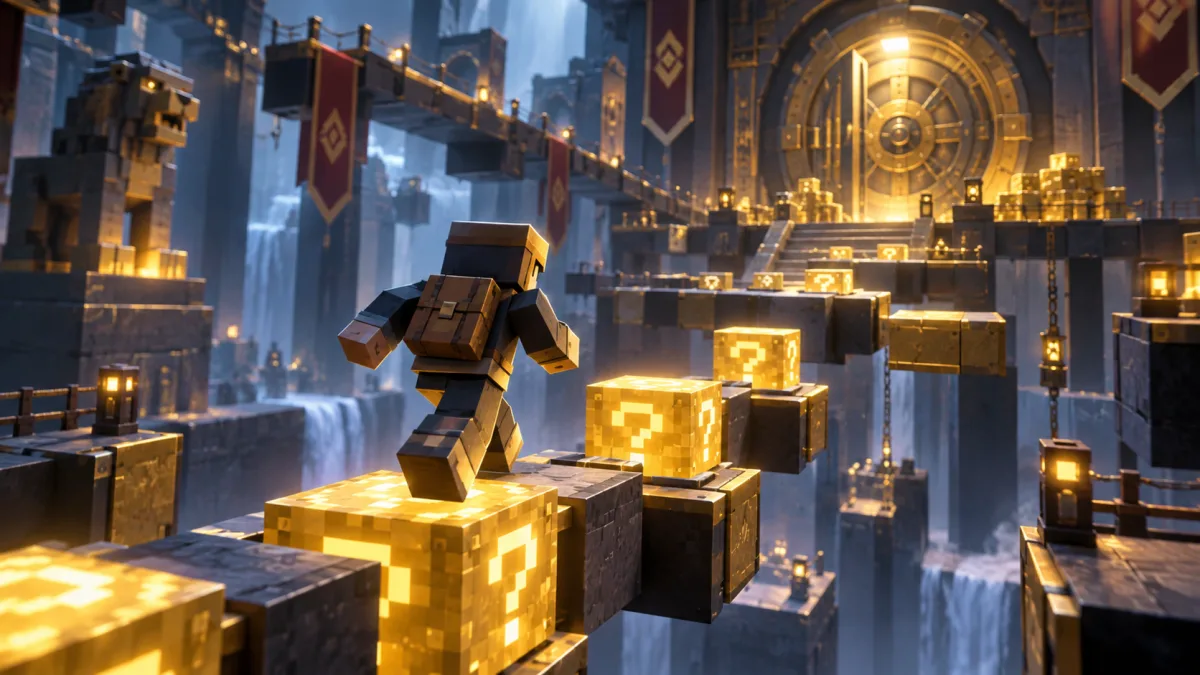
Obby: Lucky Block Heist is examined through an original editorial image built around geometric platforms, golden cube lights, a distant circular vault, and cool vertical architecture. The article stays with the confirmed theme and visible composition. It does not treat the illustration as a gameplay capture or invent controls, levels, rewards, characters, competitive rules, or technical systems.
A Route Made From Separate Volumes
The platforms do not form one continuous floor. Their gaps turn empty space into part of the composition, while repeated golden cubes lead the eye toward the vault. The anonymous figure provides scale without implying a named role.
Light Connects the Obstacles
Scale supplies the first reliable guide. The largest form establishes the subject, medium shapes explain the surrounding space, and quieter details extend the setting without competing for attention. This order remains legible when the wide hero is reduced to a blog card.
Color performs a structural role rather than acting as decoration. Warm accents identify focal areas, cooler regions create distance, and neutral surfaces connect both groups. Controlled contrast prevents secondary objects from becoming false instructions.
Architecture Holds the Motion
Strong vertical walls counter the forward path. Waterfalls and distant bridges soften that rigid construction, yet the circular door remains the final architectural anchor. The result suggests direction through geometry rather than through labels.
Visual Notes
- The nearest blocks carry the strongest highlights.
- The vault remains visible beyond several depth layers.
- Dark stone protects the readability of the gold accents.
- The image contains no copied characters or interface.
Continue Through the Site
Visit Obby: Lucky Block Heist, compare related titles in Multiplayer Games, or return to the OviGames homepage.
Closing Reflection
The scene succeeds because the route is understandable before its destination is reached. Separate blocks, repeated light, and a stable architectural target transform a complicated chamber into a readable visual sequence.
Depth Is Built in Intervals
The foreground cubes are large enough to reveal beveled edges and surface wear. Mid-distance platforms become narrower, and the vault architecture compresses into a bright circular pattern. This gradual reduction produces depth more reliably than haze alone. It also lets the viewer estimate how far the visual route extends without a map or written instruction.
The Figure Remains Anonymous
The block-built traveler has no readable badge, name, or borrowed costume. Its backpack-like volume and forward posture are visual devices that connect one platform to the next. Keeping the figure anonymous prevents the editorial image from being mistaken for evidence about a particular playable character.
Repetition Without Mechanical Claims
Golden cubes repeat across the chamber, but the article does not define what they do. Visually, they establish rhythm, connect distant surfaces, and contrast with blue-gray stone. Those observations are supported by the artwork; a reward, hazard, collectible, or special effect would require information not established here.
The Wide Hero at Smaller Sizes
When reduced, fine chains and distant masonry become atmosphere. The traveler, nearest cubes, suspended route, and illuminated vault survive. That hierarchy is useful for an article image because its core idea remains identifiable both above the full post and inside a compact listing card.
Spatial Rhythm Across the Frame
The visual journey alternates between broad platforms and narrow connections. That change of width stops the route from feeling like a simple corridor. Lamps on the outer edges repeat at lower intensity, establishing a secondary rhythm behind the stronger golden cubes.
Atmosphere Without Visual Confusion
Mist and falling water occupy the deepest gaps, where they can suggest scale without covering a landing surface. The cool atmosphere also separates foreground blocks from distant masonry. This division keeps the route readable while giving the chamber a sense of height.
Seen as a complete visual essay, the hero depends on relationships rather than isolated decoration: the figure needs the platforms for scale, the platforms need the lights for continuity, and the lights need the vault for direction. Removing any one layer would weaken the composition’s argument.