Nexus 3D: How Light and Geometry Build a Spatial Puzzle
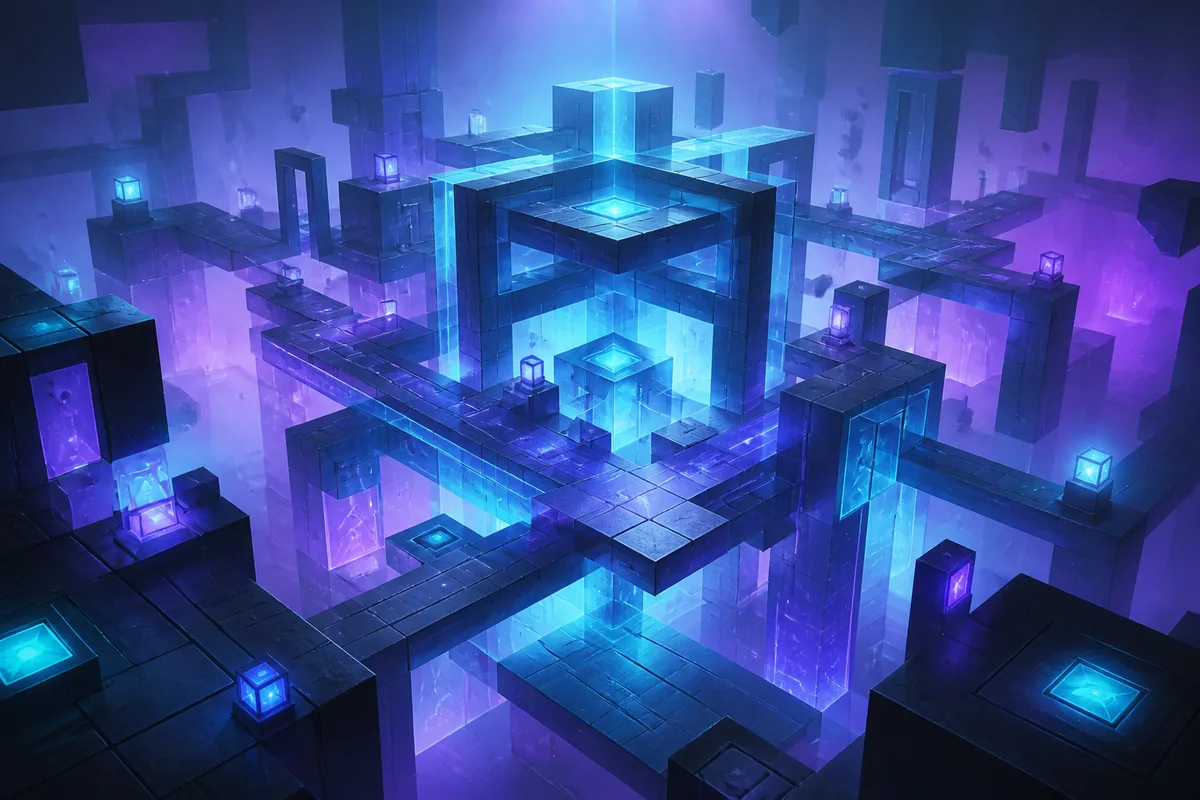
Nexus 3D is defined by the relationship between geometry, depth, and carefully controlled light. This editorial article looks at how an abstract spatial world can remain readable even when platforms cross above and below one another. It complements the game page without repeating its description or assuming mechanics that have not been confirmed.
A Central Structure Creates Orientation
The brightest cube occupies the middle of the composition and acts as a visual anchor. Bridges extend outward in several directions, but their repeated proportions keep the scene coherent. Cyan illumination marks the most important edges, while violet shadows separate distant layers.
Depth Depends on Overlap
Platforms pass in front of and behind the central form, creating a strong sense of three-dimensional space. Small lantern-like lights provide scale references. The original hero image is editorial artwork, not a gameplay screenshot.
Details That Improve Spatial Clarity
- Consistent tiles reveal the direction of each surface.
- Bright edges distinguish nearby paths from the background.
- Open gaps preserve silhouettes between structures.
- Cool colors unite the different layers.
Explore the Puzzle Theme
Open Nexus 3D on OviGames, browse the Puzzle Games category, or return to the OviGames homepage.
Closing View
The scene feels complex without becoming confusing because light, scale, and repetition follow a consistent visual system. Geometry supplies structure, while color identifies depth and direction.
Extended Visual Essay
A measured reading of Nexus 3D begins with the relationship described as A Central Structure Creates Orientation. The composition can be read as a sequence of choices about emphasis, distance, and balance. The specific note “Open gaps preserve silhouettes between structures” supplies an article-based reference, so the discussion can develop from material already established rather than from an invented feature. It remains an interpretation of the editorial presentation, not a claim about undocumented gameplay.
The visual argument around Nexus 3D becomes clearer when Depth Depends on Overlap is considered at a slower pace. The value of this detail lies in the way it organizes attention without relying on promotional claims. The specific note “Cool colors unite the different layers” supplies an article-based reference, so the discussion can develop from material already established rather than from an invented feature. It remains an interpretation of the editorial presentation, not a claim about undocumented gameplay.
Within Nexus 3D, the idea of Details That Improve Spatial Clarity deserves more than a quick glance. This observation connects the larger scene with the smaller reference points already identified in the article. The specific note “Consistent tiles reveal the direction of each surface” supplies an article-based reference, so the discussion can develop from material already established rather than from an invented feature. It remains an interpretation of the editorial presentation, not a claim about undocumented gameplay.
A measured reading of Nexus 3D begins with the relationship described as Explore the Puzzle Theme. The composition can be read as a sequence of choices about emphasis, distance, and balance. The specific note “Bright edges distinguish nearby paths from the background” supplies an article-based reference, so the discussion can develop from material already established rather than from an invented feature. It remains an interpretation of the editorial presentation, not a claim about undocumented gameplay.
The visual argument around Nexus 3D becomes clearer when Closing View is considered at a slower pace. The value of this detail lies in the way it organizes attention without relying on promotional claims. The specific note “Open gaps preserve silhouettes between structures” supplies an article-based reference, so the discussion can develop from material already established rather than from an invented feature. It remains an interpretation of the editorial presentation, not a claim about undocumented gameplay.
Within Nexus 3D, the idea of A Central Structure Creates Orientation deserves more than a quick glance. This observation connects the larger scene with the smaller reference points already identified in the article. The specific note “Cool colors unite the different layers” supplies an article-based reference, so the discussion can develop from material already established rather than from an invented feature. It remains an interpretation of the editorial presentation, not a claim about undocumented gameplay.
A measured reading of Nexus 3D begins with the relationship described as Depth Depends on Overlap. The composition can be read as a sequence of choices about emphasis, distance, and balance. The specific note “Consistent tiles reveal the direction of each surface” supplies an article-based reference, so the discussion can develop from material already established rather than from an invented feature. It remains an interpretation of the editorial presentation, not a claim about undocumented gameplay.
The visual argument around Nexus 3D becomes clearer when Details That Improve Spatial Clarity is considered at a slower pace. The value of this detail lies in the way it organizes attention without relying on promotional claims. The specific note “Bright edges distinguish nearby paths from the background” supplies an article-based reference, so the discussion can develop from material already established rather than from an invented feature. It remains an interpretation of the editorial presentation, not a claim about undocumented gameplay.
Within Nexus 3D, the idea of Explore the Puzzle Theme deserves more than a quick glance. This observation connects the larger scene with the smaller reference points already identified in the article. The specific note “Open gaps preserve silhouettes between structures” supplies an article-based reference, so the discussion can develop from material already established rather than from an invented feature. It remains an interpretation of the editorial presentation, not a claim about undocumented gameplay.