Magnet Sort: Reading Rhythm Across the Factory Line
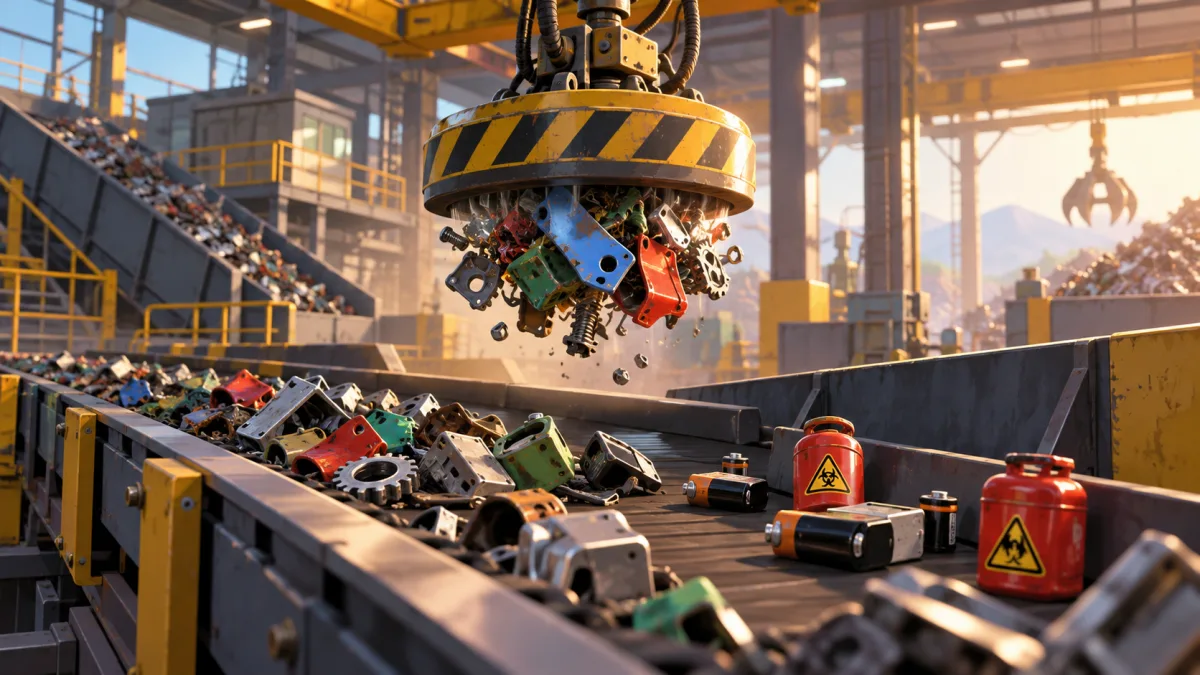
Magnet Sort is examined here through an original editorial factory scene: a broad conveyor, a suspended magnetic crane, mixed metal components, and a small group of clearly separated hazard containers. The image reflects confirmed elements from the game description while avoiding a copied interface. Its strongest idea is not speed alone, but the relationship between timing, classification, and the continuous movement of an industrial line.
The Conveyor Creates a Measured Visual Rhythm
A conveyor naturally divides time into arriving, active, and departing zones. Components enter from one side, pass beneath the magnet, and continue toward the opposite edge. That direction lets the eye understand the scene before examining individual pieces. Repeated belt slats work like visual beats, while gaps between objects create brief moments in which the next selection can be considered.
The magnet interrupts that horizontal rhythm with a strong vertical action. Its circular housing descends from the ceiling structure and lifts a compact cluster of parts. This contrast between sideways movement and upward collection gives the composition a clear center. The crane does not need an invented control panel or numerical display; position and distance communicate the essential tension.
Useful Material Versus Visible Risk
Color separates ordinary scrap from objects that require caution. Blue, green, and neutral metal pieces are distributed along the belt, while red containers and batteries remain isolated. The distinction is editorial rather than instructional, yet it mirrors the supplied description’s focus on collecting components and avoiding hazardous items.
Surface treatment supports the same hierarchy. Worn paint, exposed edges, and dull steel identify recyclable material. Smooth cylinders and warning-colored containers appear more deliberate and therefore more noticeable. Nothing is labeled with readable text, so the separation depends on shape, palette, and placement.
Scale and Light Inside the Factory
Warm late-day light enters through high windows and catches the crane housing, railings, and moving parts. Cooler shadows remain around the belt and background piles. This lighting keeps the central action readable while giving the wider factory enough depth to feel operational rather than decorative.
Multiple cranes and scrap areas continue into the distance, but they are softened to prevent them from competing with the foreground. The result suggests a large sorting facility while preserving a single understandable action. It is a useful example of how scale can be implied without crowding every part of the frame.
Visual Notes
- The belt establishes one continuous horizontal direction.
- The magnet provides the strongest vertical counter-movement.
- Hazard-colored objects remain isolated and easy to distinguish.
- Warm light emphasizes machinery without hiding material textures.
- The illustration contains no copied game interface, logo, or readable text.
Continue Through OviGames
Open Magnet Sort for the playable page, explore more titles in Hypercasual Games, or return to the OviGames homepage.
A Reflective Closing View
The scene works because every major element explains a different part of the confirmed theme. The belt supplies pace, the magnet supplies selection, mixed components supply variety, and the separated containers supply caution. Together they turn a busy industrial subject into an ordered visual essay about reading movement before acting.
Why Restraint Improves the Industrial Scene
A factory can easily become visually noisy, especially when every pipe, railing, cable, and pile receives equal emphasis. Here, restraint is part of the analysis. The nearest belt carries enough components to explain sorting, while background material is grouped into broader shapes. Windows and beams repeat at a slower rhythm than the belt, giving the eye a stable frame around the faster central movement.
The editorial image also avoids presenting every confirmed feature at once. Contracts, upgrades, and the endless option belong to the supplied game description, but placing literal menus or numerical values in the artwork would imply an exact interface. The illustration therefore concentrates on the physical idea shared by those systems: observe the line, distinguish useful material from hazards, and act at an appropriate moment.
A final compositional detail deserves notice: the collected parts form a compact cluster rather than a perfect pattern. That irregularity keeps the magnet believable as a working tool and prevents the central action from feeling staged.