Klondike Solitaire Treasures: Reading a Table of Cards and Relics
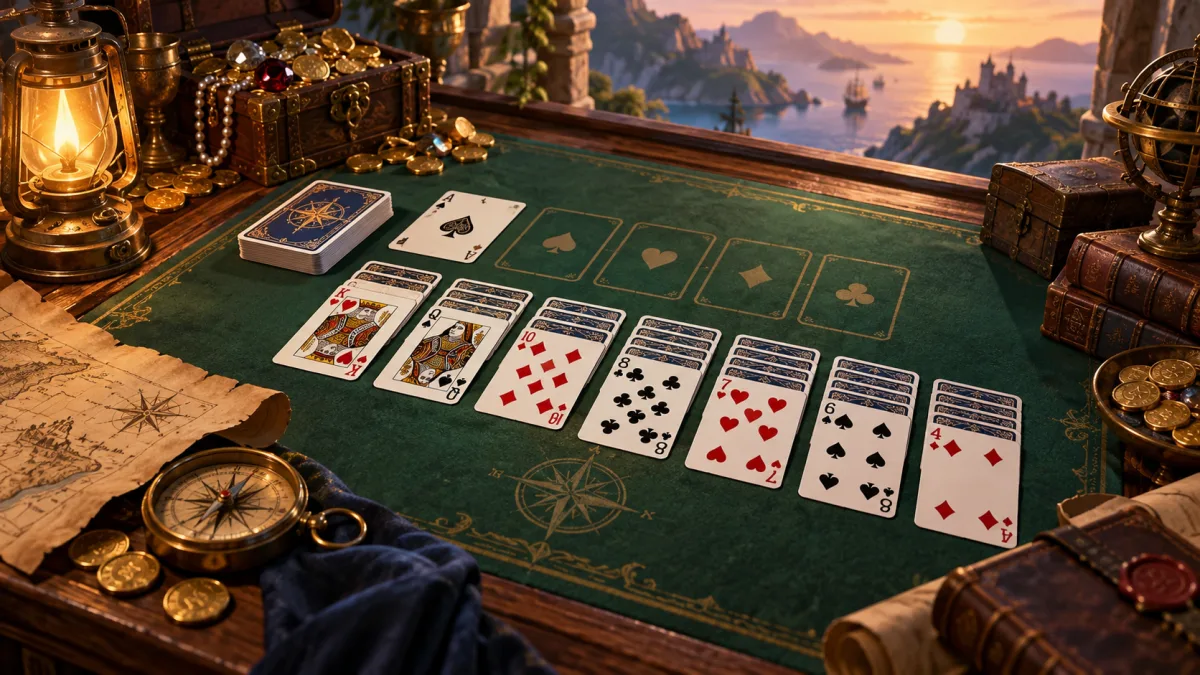
Klondike Solitaire Treasures is considered here through an original editorial scene rather than a gameplay capture. A green card table, ordered columns, warm lantern light, old navigation objects, and a distant coastal landscape connect the familiar card-puzzle theme with the idea of discovery. The discussion stays with visible composition and confirmed subject matter; it does not assume particular rules, rewards, levels, or progression.
The Table Establishes a Visual Map
The broad felt surface works almost like a chart. Card columns occupy the lower half, open suit spaces create a quieter band above them, and the deck remains separated to the left. This hierarchy makes the scene readable before individual card values are examined. Repeated rectangular forms create rhythm, while the empty areas prevent the arrangement from becoming visually dense.
Treasure details sit around the table instead of covering it. Coins, a small chest, a compass, and rolled maps frame the subject and reinforce the title. Their placement is deliberately secondary: the cards remain the clearest objects, and the surrounding relics explain atmosphere rather than pretend to be interactive items.
Light Separates Cards From Relics
A lantern introduces the strongest warm highlight from the left. That glow catches metal edges and wooden surfaces, yet the green felt absorbs enough light to preserve contrast around the cards. Cooler daylight in the distant landscape opens the background and stops the scene from feeling enclosed.
Material changes also organize attention. Paper is pale and matte, metal is reflective, wood is dark and textured, and cloth provides a calm base. Because each material responds differently to the same light, adjacent objects remain distinct even when the hero image is reduced for a smaller blog card.
Order, Repetition, and Pause
Solitaire imagery depends on repeated forms, but repetition alone can become monotonous. Here, variations in column height and exposed card color create measured interruptions. The deck provides a compact block, the suit spaces introduce pause, and the scattered treasure objects break the table’s strict geometry without obscuring it.
The coastal view contributes a second scale. The card table is immediate and detailed; mountains, water, and distant buildings are broad and softened. That contrast turns a tabletop arrangement into a wider visual essay about close observation and imagined distance.
Visual Notes
- Card columns remain the main information layer.
- Treasure objects frame the subject without becoming interface elements.
- Warm foreground light contrasts with the cooler distance.
- The illustration is original and contains no copied game interface.
- No visible text, logo, or promotional claim is used.
How the Frame Guides a Second Look
The first scan usually follows the brightest objects: lantern, exposed cards, coins, and the pale horizon. A slower reading reveals a different route through the picture. Compass lines echo the suit spaces, map edges repeat the card rectangles, and the wooden frame ties the table to the surrounding books and boxes. These relationships give the image continuity without turning every prop into a symbol.
The absence of a visible hand is also important. It keeps the arrangement observational and prevents the illustration from suggesting a precise move. The table appears paused rather than abandoned, with enough order to imply attention but no staged action that would falsely document gameplay.
Responsive Cropping Considerations
On a wide screen, the coastal distance and both side groups of relics remain visible. A narrower crop naturally favors the cards, lantern, and central felt. That hierarchy was planned so the theme survives without requiring every peripheral object. The strongest materials and colors stay close to the middle, while optional atmosphere occupies the edges.
Continue Through OviGames
Open Klondike Solitaire Treasures for the game page, browse other titles in Puzzle Games, or return to the OviGames homepage.
A Reflective Closing View
The composition succeeds by treating the table as both an ordered puzzle surface and a place associated with travel and discovery. Cards supply discipline; relics supply context; the distant horizon supplies breathing room. None of those layers needs to explain undocumented mechanics. Together they create a precise editorial portrait of a treasure-themed Klondike title.