Blasties: Chain Reaction, Color, and Board Rhythm
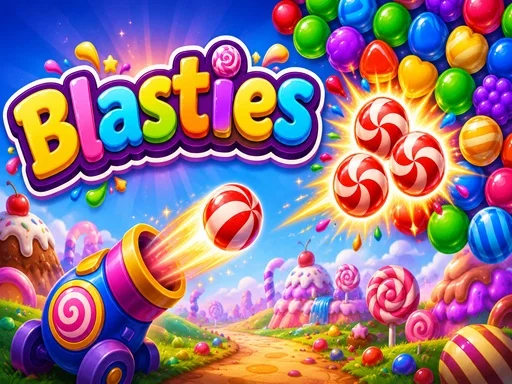
Blasties turns a compact puzzle board into a study of cause and effect. Bright pieces occupy a limited field, and every visible reaction changes the relationship between what remains. The scene is playful, yet its clearest quality comes from the way color, spacing, and blast feedback explain a developing sequence.
A board that changes after contact
A static arrangement can be read as a map. Once a piece reacts, however, that map is revised. Neighboring shapes may become more prominent, gaps can appear, and a cluster that initially looked unified may split into smaller regions. The useful skill is not simply noticing the first effect, but reading the new board that follows it.
Strong feedback makes this transition understandable. A short burst identifies the source, while movement or color change shows which nearby elements were affected. When the effect clears quickly, the eye can return to the board and compare the new arrangement with the previous one.
Color organizes the field
Color gives each piece an immediate identity and helps similar objects form visual groups. Saturated tones attract attention, but contrast between neighboring pieces is equally important. If two active regions blend together, their relationship becomes difficult to judge; distinct edges preserve the logic of the board.
The background should remain quieter than the interactive pieces. This difference allows small objects to stay readable without excessive outlines or interface decoration. Empty spaces also matter because they separate clusters and reveal how far a reaction extends.
Reaction order and visual rhythm
A puzzle built around blasts gains rhythm from alternating moments of preparation and change. The board pauses long enough to be inspected, an action begins, several elements respond, and the scene settles into another readable state. That cycle creates pacing without requiring constant movement.
When multiple effects occur together, their order should still be traceable. Slight differences in timing can connect one reaction with the next. The viewer then understands the sequence as a chain rather than a collection of unrelated animations.
Details worth observing
- Which pieces are visually grouped before an action.
- How far each reaction appears to reach.
- Whether empty space isolates important clusters.
- How quickly effects clear from the active board.
- Which new arrangement becomes visible afterward.
From first glance to the live board
The public presentation establishes the confirmed ingredients: colorful reactive pieces, a bounded puzzle field, visible blast effects, and immediate screen feedback. It does not require invented claims about levels, rewards, power-ups, or scoring systems. The active interface remains the reliable source for any current instructions.
Open Blasties to inspect the live puzzle, or continue through the Puzzle Games collection for more browser titles centered on visual logic.
Why restraint improves the spectacle
Explosive effects are naturally attention-grabbing, but their purpose is informational as well as decorative. A restrained burst can mark contact, direction, and consequence without hiding the next decision. Too much residue would weaken the relationship between the action and the board it changed.
Blasties is therefore most readable when spectacle and structure alternate. Color introduces the pieces, spacing defines their relationships, a reaction briefly interrupts the order, and the refreshed board restores it. That repeated reconstruction gives the puzzle its visual identity and lets a small playfield feel continuously active.
The compact format also rewards comparison. A single change can influence the balance of the whole board because every object remains close enough to be considered. The viewer is invited to look beyond one bright effect and notice how each local event reshapes the complete composition.
Edges, corners, and limited space
The boundaries of the board influence how every cluster is perceived. Pieces near a corner have fewer neighboring directions, while objects near the center participate in a denser network of possible reactions. This geometric difference creates variety without requiring the playfield itself to change shape.
Watching the edges after a blast can reveal isolated pieces that were previously hidden by a larger group. These quieter regions may become visually important once the center settles. The board therefore encourages a complete scan rather than permanent focus on the brightest cluster.