Apex Prime: Wilderness, Scale, and Survival
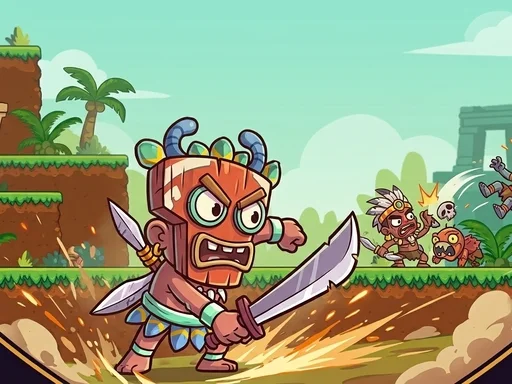
Apex Prime sets its survival premise in a prehistoric wilderness where large predators change the meaning of open ground. The supplier describes exploration, primitive weapon crafting, and encounters with those animals. Those three elements are enough to frame an editorial question: how does a landscape make a visitor feel exposed before any confrontation begins? This essay considers the setting and the relationship between preparation and danger, without supplying maps, recipes, or combat rules that the source does not establish.
Wilderness as more than background
A prehistoric setting carries an immediate sense of distance from familiar tools and shelter. Space that might look inviting in a travel scene becomes uncertain when its inhabitants are much larger than the person crossing it. Trees, rock forms, clearings, and other environmental details may be read as landmarks in the active game, but their exact arrangement has to be confirmed there. The important relationship is between the explorer and the space that must be understood.
Scale gives that relationship its force. A large creature can dominate a scene even before it moves; the surrounding terrain then becomes a measure of its size. This does not prove a particular encounter pattern. It does show why the game's named predators are central to its identity rather than incidental decoration.
Preparation belongs beside exploration
The supplier identifies primitive weapon crafting, but gives no recipe list or resource economy. It would be easy to turn that brief statement into a catalogue of imagined equipment. A more accurate reading is narrower: preparation matters because the wilderness is not presented as a safe sightseeing route. Crafting suggests a response to the environment, while exploration supplies the context in which that response may become relevant.
There is also a useful tension between moving onward and stopping to assess. Neither choice can be prescribed from a short listing. The live interface must show where a visitor can go, which materials are available, and what an encounter actually demands. The article can describe that tension without pretending to be a strategy guide.
Predators and the visual balance of risk
Large animals are the stated source of danger. In a readable scene, the visitor, terrain, and creature need distinct visual roles. A clear silhouette can establish the predator; surrounding space provides a sense of approach or separation. Contrast and perspective can make that relationship legible even when the background is visually rich. These are observations about the premise, not a claim that every encounter works in the same way.
The prehistoric subject also separates Apex Prime from modern weapon settings. Its materials and animals imply an older, less controlled environment, but the source does not identify a historical period, scientific reconstruction, or specific species. Treating the setting as a stylized game world is more honest than dressing it in unsupported facts.
Notes before entering the game
- The documented activities are exploration, primitive crafting, and predator encounters.
- The supplier does not provide a map, crafting recipes, or a fixed battle sequence.
- The current game screen is the reference for controls and available routes.
- Landscape and creature scale are the clearest themes to watch.
From article to playable page
Open Apex Prime to see its current browser presentation. The Arcade Games category offers a wider route through the site; it does not redefine this game's particular prehistoric subject.
An ancient setting with a practical question
What makes this premise interesting is not an invented list of systems. It is the simple contrast between a visitor who must prepare and an environment already occupied by formidable animals. Exploration supplies uncertainty, crafting suggests a possible answer, and encounters test that answer in the active game. The exact balance among them belongs to the live version.
Apex Prime is therefore best introduced through its verified relationships rather than promises of countless worlds or elaborate progression. The title names a prehistoric survival scene, and the supplier gives enough detail to explain why its terrain and predators matter. Everything more specific should be observed at the point of play. That restraint leaves the wilderness with its sense of unknown space while giving readers a clear, reliable starting point.